
Can You Move a Hot Tub in Winter?
Yes. The cold does not hurt the carry, it hurts a drained tub: water left in the pumps, heater, jets and lines can freeze, and the spa warranties we read exclude freeze damage, so a winter move works when the lines are cleared properly and the tub is refilled and running on moving day or the day after.
Already know you need someone out? Call (315) 640-3590.
A winter move, in the order that protects the tub
Circuit ready
Registered electrical contractorThe new circuit is permitted and inspected before moving day, so the tub never waits drained for an electrician.
Drain and clear the lines
Spa moverAll the water out of the pumps, heater, jets and lines, not just the shell. A maintenance drain is not enough.
Carry in daylight
Spa moverOn most winter days in cold climates the high climbs above freezing, so the move happens in the afternoon.
Refill and heat
OwnerOn moving day or the day after. From then on the tub stays full and running.
In cold climates, freezing nights in winter create risk. The hours a tub spends drained are the critical window. Catalina Spas owner's manual.
What actually goes wrong in a winter move
A hot tub that is full, heated and running shrugs off winter cold, and so does the carry. The risk sits in the hours between disconnecting it and getting it running again. Once the tub is drained, any water still in the pumps, heater, jets and plumbing lines can freeze. Catalina Spas' owner's manual is blunt about it: all of the water has to come out of the filter housing, pumps, heater, jets and lines, draining the way you would for routine maintenance does not give adequate protection from freezing, and damage if the spa freezes is not covered under the warranty. Resort Hot Tubs and Viking Spas both list freeze damage among their warranty exclusions as well. If a component cracks after a winter move, expect the repair to be yours, which is why clearing the lines matters more than the truck.
Where the tub is going matters
The risky night is usually the first one at the new address. Location matters because altitude, proximity to water, and urban heat all shift when freezing weather arrives. A move to a colder climate or higher elevation carries more freeze risk than a move on the same site, so the planning process looks at where the tub is going as much as where it is leaving. Your mover should ask about both addresses before quoting.
Why a cold day is usually workable and a cold night is not
In most cold climates, winter brings freezing nights and thawing afternoons. That is what makes a winter move possible: on most winter days the drain, the carry and the set can all happen above freezing, in daylight. The problem is the night after. Between late fall and early spring there is no point hoping the night stays mild. A drained tub left overnight in a yard, a trailer or an unheated garage should be treated as exposed, and that is where damage happens.
What a well-planned winter move looks like
The order is what protects the tub. The circuit at the new house is installed and inspected before moving day, so nothing is waiting on an electrician once the tub arrives. At the old house the tub is drained and its lines cleared properly, not just emptied the way you would for a water change. The carry happens in daylight. The tub is set, refilled and powered up on moving day or the day after, and it stays heated from then on. The drain water needs a plan too: local codes may restrict where and when water can go, so on a cold day the water may need somewhere else to go, or the drain waits for a milder afternoon.
When waiting is the better answer
Sometimes the honest advice is not to move it yet. If your dates are flexible, spring through early fall carries far less freeze risk than winter. If the tub is going to a colder climate or higher elevation, waiting for warmer weather reduces risk significantly. And if the new spot has no circuit yet, do not move the tub only to leave it drained in the yard for a week. Leave it running where it is until the other end is ready, and book the move for when it can go straight back into service.
What to tell us so the move is planned for the cold
Three answers let us plan a winter move properly: where the tub is now, where it is going, and whether the new spot already has its pad and an inspected circuit. Add your closing or move-out date and we can tell you whether the timing is workable, what has to be ready at the other end first, and which vetted local spa mover fits the job. The mover who takes it is licensed and insured and prices the work themselves, and sending a request carries no obligation. With winter bringing freezing risk, the date you give us changes the plan more than anything else.
Warranty exclusions: freeze damage

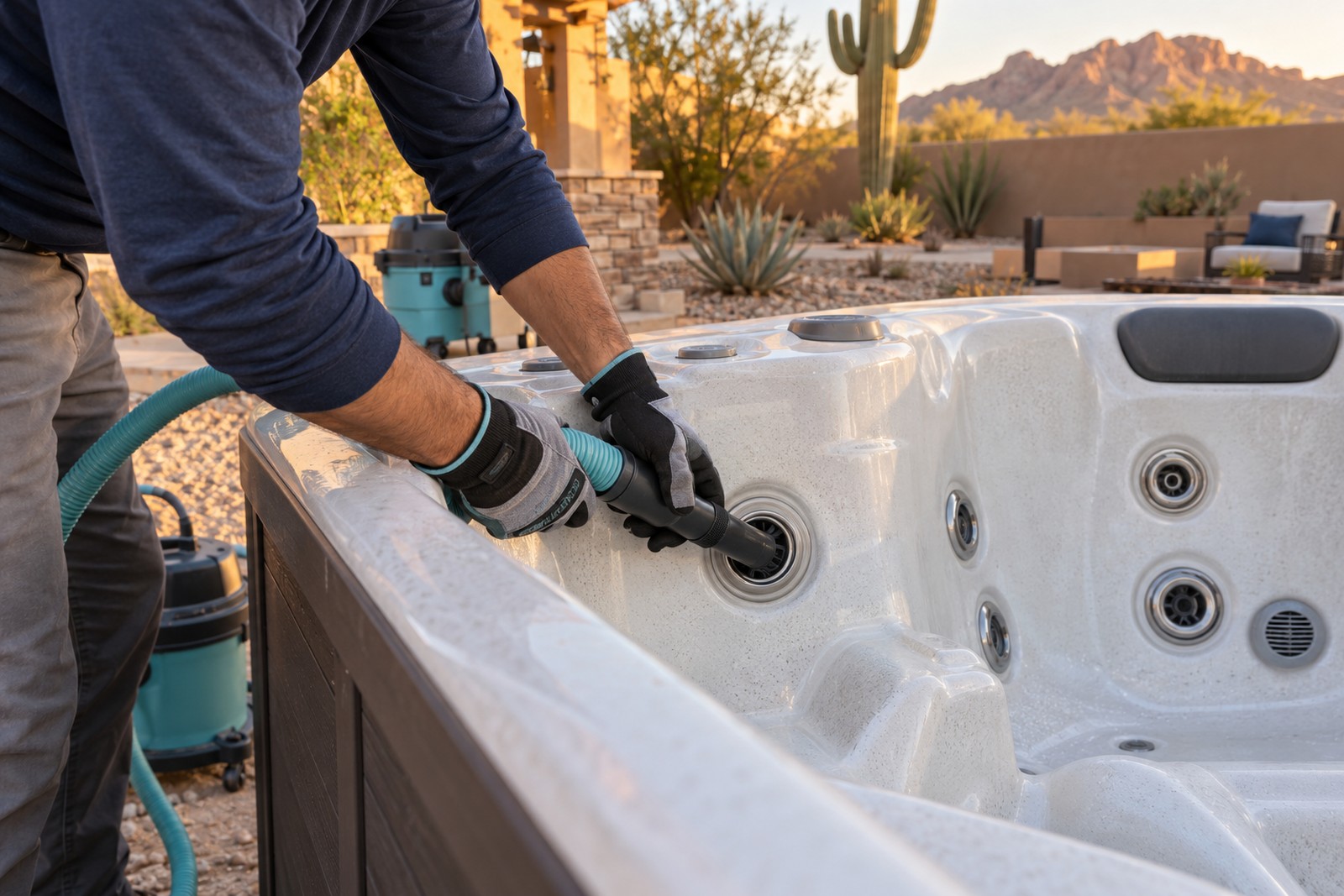
Catalina Spas' owner's manual states that all of the water must be removed from the filter housing, pumps, heater, jets and plumbing lines, that draining as for normal maintenance does not give adequate protection from freezing, and that damage if the spa freezes is not covered under the warranty.
Source: Catalina Spas, Owner's Manual, accessed 2026-10-02
Resort Hot Tubs' warranty excludes freeze damage and damage from operating the hot tub at water temperatures outside 34F to 104F, and places the cost of moving the tub off the premises for a warranty repair on the purchaser.
Source: Resort Hot Tubs, accessed 2026-10-02
Services this guide relates to
Need someone to look at it?
Send the details and we will come back to you.